


Location
United Kingdom
Qualification
Bachelor Degree with Honours
Fees
GBP33250
(2025)
Duration
3 Year(s)
Next intake
29 September 2026
Course info
- Scholarships View all scholarships
- Internships
Entry requirements for Durham University
Application Deadline
The application deadline isn't available Speak to an IDP counsellor for more detailed information
Further information
If you aren't eligible for the above entry requirements, you might have a chance to explore pathway options at Durham University. If you want to find out more, speak to our counsellors.
THE World Ranking
172nd / 1250
THE World Ranking8th / 130
Complete University guideWhat our students think
We’ve haven’t received any reviews for this institution yet.
Join the IDP student community
Connect with peers and student ambassadors to hear real experiences, tips, and advice about studying abroad.

Recommended for you
- Bachelor Degree with Honours
- Liverpool , United Kingdom
- Next intake:10/2026
- Entry Score: IELTS 6.0
- GBP12500 (2025)
- Bachelor Degree with Honours
- Liverpool , United Kingdom
- Next intake:10/2026
- Entry Score: IELTS 6.0
- GBP12500 (2025)
- THE World Ranking:29
- Undergraduate Certificate
- Edinburgh , United Kingdom
- Next intake:09/2026
- GBP29600 (2025)
- THE World Ranking:172
- Bachelor Degree
- Devon , United Kingdom
- Next intake:09/2026
- GBP31200 (2025)
- Bachelor Degree with Honours
- Liverpool , United Kingdom
- Next intake:09/2026
- Entry Score: IELTS 6.0
- GBP14500 (2025)
- THE World Ranking:601
- Bachelor Degree with Honours
- Manchester , United Kingdom
- Next intake:10/2026
- Entry Score: IELTS 6.0
- GBP20000 (2025)
- THE World Ranking:301
- Bachelor Degree with Honours
- London , United Kingdom
- Next intake:10/2026
- GBP22540 (2025)
- THE World Ranking:1501
- Bachelor Degree with Honours
- Chester , United Kingdom
- Next intake:10/2026
Your action plan
Step 1
Shortlist your courses
Choose the best three courses you’re most likely to pursue.
Step 2
Check your eligibility
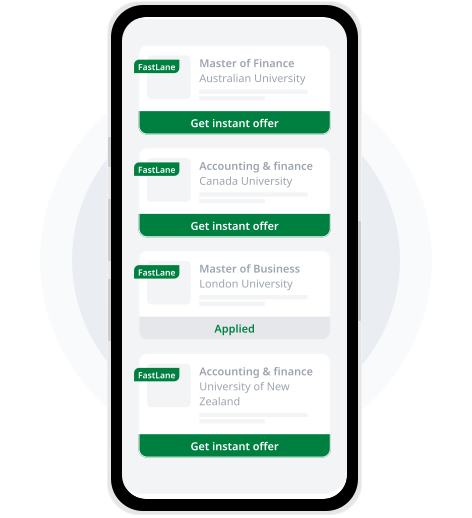
Get an instant in-principle offer for courses with the IDP FastLane tag.
Step 3
Apply through IDP Live
Fill out the form once and use it to apply to multiple courses.
How does IDP FastLane work?
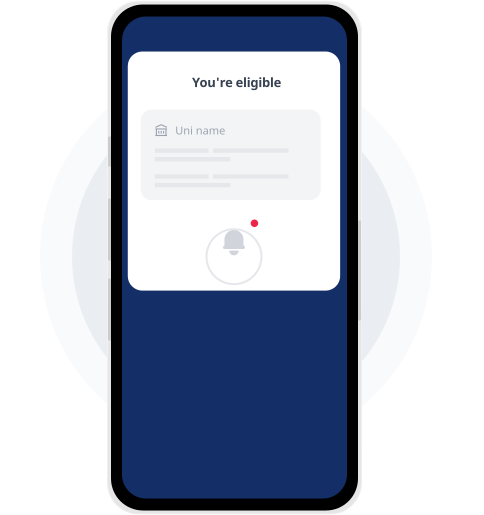
With the FastLane 'Offer in Principle', you'll know in minutes if you'll be accepted!
 1
1Select an institution and course
 2
2Create your academic profile
 3
3Submit your application for an 'Offer in Principle'
 4
4Your chosen institution(s) will send you a decision in minutes!
 5
5Get ready to apply with an expert counsellor