


Location
United Kingdom
자격
MSc - Master of Science
금액
GBP18200
(2026)
지속 기간
1 Year(s)
다음 입학시기
14.09.2026
입학 조건
6.5
IELTSCOURSE_INFO
- 장학금 모든 장학금 보기
- 인턴쉽
입학 요건 Keele University
신청 마감일
지원 마감일이 없습니다. IDP 유학전문 카운셀러에게 문의하기 더 자세한 정보를 위해
Further information
If you aren't eligible for the above entry requirements, you might have a chance to explore pathway options at Keele University. If you want to find out more, speak to our counsellors.
Chat to a student ambassador
Speak to IDP ambassadors today!

Dima Tokarenko

Aastha Paudel

Geraldine Penarete Vaquiro

Yumi Wan
Your study abroad community
Discover genuine experiences and practical tips from IDP student ambassadors and peers worldwide.

추천
- 세계랭킹:801
- Postgraduate
- Wolverhampton , United Kingdom
- 다음 입학시기:21.09.2026
- 입학 조건: IELTS 6.5
- GBP16950 (2026)
- 세계랭킹:1201
- Postgraduate
- Stoke-On-Trent , United Kingdom
- 다음 입학시기:21.09.2026
- 입학 조건: IELTS 6.5
- GBP17500 (2026)
- 세계랭킹:801
- Postgraduate
- Salford , United Kingdom
- 다음 입학시기:14.09.2026
- 입학 조건: IELTS 6
- GBP19980 (2026)
- 세계랭킹:501
- Postgraduate
- Plymouth , United Kingdom
- 다음 입학시기:21.09.2026
- 입학 조건: IELTS 6.5
- GBP21000 (2026)
- 세계랭킹:501
- Postgraduate
- Plymouth , United Kingdom
- 다음 입학시기:21.09.2026
- 입학 조건: IELTS 6.5
- GBP20150 (2026)
- 세계랭킹:1001
- Postgraduate
- London , United Kingdom
- 다음 입학시기:21.09.2026
- 입학 조건: IELTS 6.5
- GBP17220 (2026)
- 세계랭킹:601
- Postgraduate
- Derby , United Kingdom
- 다음 입학시기:21.09.2026
- 입학 조건: IELTS 6.5
- GBP17500 (2026)
- 세계랭킹:1501
- Postgraduate
- Chester , United Kingdom
- 다음 입학시기:12.10.2026
- 입학 조건: IELTS 6.5
- GBP15500 (2026)
- 세계랭킹:1501
- Postgraduate
- Chester , United Kingdom
- 다음 입학시기:14.09.2026
- 입학 조건: IELTS 6.5
- GBP15500 (2026)
- 세계랭킹:198
- Postgraduate
- Belfast , United Kingdom
- 다음 입학시기:21.09.2026
- 입학 조건: IELTS 6
- GBP27600 (2026)
Your action plan
절차 1
Shortlist your courses
Choose the best three courses you’re most likely to pursue.
절차 2
Check your eligibility
Get an instant in-principle offer for courses with the IDP FastLane tag.
절차 3
Apply through IDP Live
Fill out the form once and use it to apply to multiple courses.
IDP의 Fastlane은 어떻게 진행되나요?
FastLane의 사전입학심사 서비스를 이용하면 몇 분 안에 합격 가능여부를 알 수 있습니다!
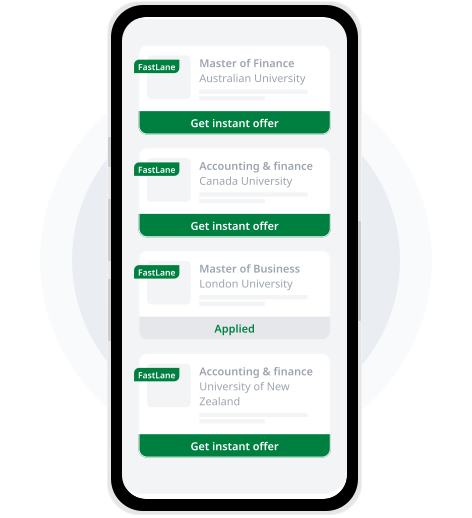 1
1학교와 전공 선택하기
 2
2지원을 위한 계정 만들기
 3
3사전심사서비스를 위한 지원서 제출
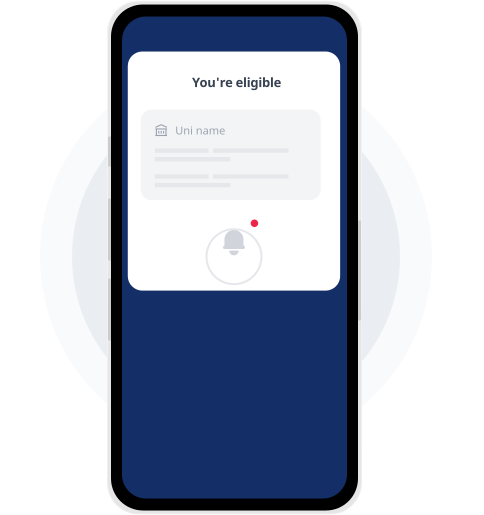 4
4선택하신 학교에서 몇 분 내로 사전심사 결과를 보내드립니다
 5
5전문 카운셀러와 함께 지원준비하기