

Doctor of Philosophy in Middle Eastern and Islamic Studies - Culture and Representation
At New York University

Location
United States
Qualification
Doctoral degree
Fees
USD41994
(2026)
Duration
8 Semester(s)
Next intake
01.09.2027
Entry Score
7
IELTSRecommended for you
- THE World Ranking:25
- Doctorate
- Seattle , United States
- Next intake:29.09.2027
- Entry Score: IELTS 6.5
- USD31214 (2026)
- THE World Ranking:31
- Doctorate
- New York , United States
- Next intake:01.09.2027
- Entry Score: IELTS 7
- USD41994 (2026)
- THE World Ranking:31
- Doctorate
- New York , United States
- Next intake:01.09.2027
- Entry Score: IELTS 7
- USD41994 (2026)
- THE World Ranking:31
- Doctorate
- New York , United States
- Next intake:01.09.2027
- Entry Score: IELTS 7
- USD41994 (2026)
- THE World Ranking:31
- Doctorate
- New York , United States
- Next intake:01.09.2027
- Entry Score: IELTS 7
- USD41994 (2026)
{"stack":"TypeError: Cannot read properties of null (reading 'title')\n at Object.CourseAccordion [as type] (/var/task/.next/server/1961.026c2838fbba868a.js:43320:61)\n at NextErrorBoundary (/var/task/.next/server/3888.de9952f58d5d08bc.js:34054:74)\n at courseAccordion (/var/task/.next/server/1961.026c2838fbba868a.js:43334:98)\n at Ri (/var/task/node_modules/react-dom/cjs/react-dom-server.browser.development.js:10:72713)\n at ji (/var/task/node_modules/react-dom/cjs/react-dom-server.browser.development.js:10:73587)\n at $i (/var/task/node_modules/react-dom/cjs/react-dom-server.browser.development.js:10:76532)\n at Xi (/var/task/node_modules/react-dom/cjs/react-dom-server.browser.development.js:10:78203)\n at Yi (/var/task/node_modules/react-dom/cjs/react-dom-server.browser.development.js:10:77988)\n at Ji (/var/task/node_modules/react-dom/cjs/react-dom-server.browser.development.js:10:80069)\n at Zi (/var/task/node_modules/react-dom/cjs/react-dom-server.browser.development.js:10:79578)","message":"Cannot read properties of null (reading 'title')"}
How does IDP FastLane work?
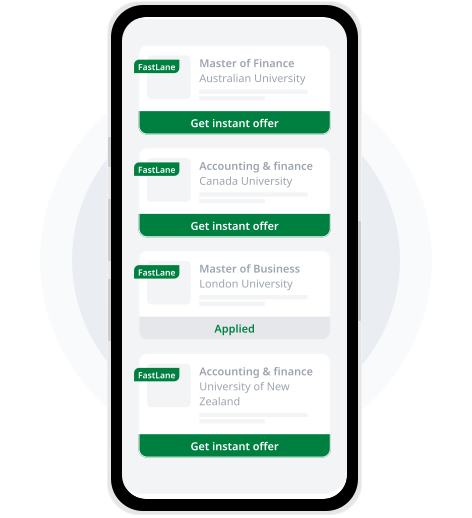
With the FastLane 'Offer in Principle', you'll know in minutes if you'll be accepted!
 1
1Select an institution and course
 2
2Create your academic profile
 3
3Submit your application for an 'Offer in Principle'
 4
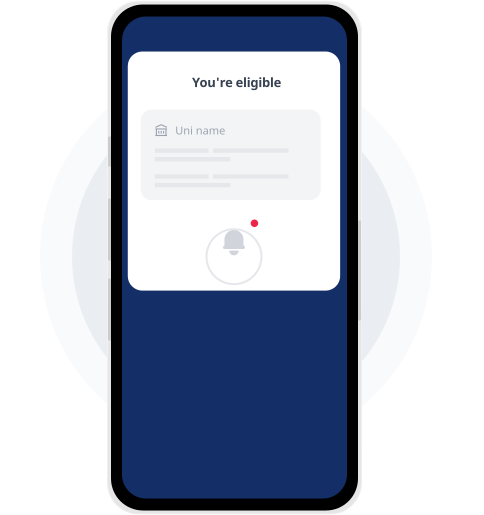
4Your chosen institution(s) will send you a decision in minutes!
 5
5Get ready to apply with an expert counsellor