


Location
United States
자격
Bachelor's Degrees
금액
USD31050
(2026)
지속 기간
8 Semester(s)
다음 입학시기
10.08.2026
입학 조건
6.5
IELTSCOURSE_INFO
- 장학금 모든 장학금 보기
- 인턴쉽
수업료에 관한 내용은 참고용으로만 사용해주세요 정확한 비용을 알기 위해
Duration: 8 Semester(s)
Fees: USD31050
| 학기 | Location |
|---|---|
| Fall (August), 2026 | STONY BROOK |
| Spring (January), 2027 | STONY BROOK |
입학 요건 SUNY Stony Brook University
신청 마감일
지원 마감일이 없습니다. IDP 유학전문 카운셀러에게 문의하기 더 자세한 정보를 위해
Further information
If you aren't eligible for the above entry requirements, you might have a chance to explore pathway options at SUNY Stony Brook University. If you want to find out more, speak to our counsellors.
THE World 세계 대학 순위
학생들이 생각하는 것
해당 기관에 대한 리뷰가 아직 없습니다.
Your study abroad community
Discover genuine experiences and practical tips from IDP student ambassadors and peers worldwide.

추천
- 세계랭킹:201
- Undergraduate
- Boston , United States
- 다음 입학시기:02.09.2026
- 입학 조건: IELTS 7
- USD67990 (2026)
- Undergraduate
- Peoria , United States
- 다음 입학시기:21.08.2026
- 입학 조건: IELTS 6.5
- USD41210 (2026)
- Undergraduate
- Peoria , United States
- 다음 입학시기:21.08.2026
- 입학 조건: IELTS 6.5
- USD41210 (2026)
- Undergraduate
- Storrs , United States
- 다음 입학시기:26.08.2026
- 입학 조건: IELTS 6.5
- USD39678 (2026)
- 세계랭킹:112
- Undergraduate
- Amherst , United States
- 다음 입학시기:03.09.2026
- 입학 조건: IELTS 6.5
- USD39683 (2026)
- Undergraduate
- Queens , United States
- 다음 입학시기:17.08.2026
- 입학 조건: IELTS 6
- USD19220 (2026)
- Undergraduate
- New York , United States
- 다음 입학시기:08.09.2026
- 입학 조건: IELTS 6
- USD48300 (2026)
- Undergraduate
- Fresno , United States
- 다음 입학시기:19.08.2026
- 입학 조건: IELTS 6
- USD18684 (2026)
- 세계랭킹:401
- Undergraduate
- Waltham , United States
- 다음 입학시기:28.08.2026
- 입학 조건: IELTS 6
- USD64348 (2026)
- Undergraduate
- Ypsilanti , United States
- 다음 입학시기:19.08.2026
- 입학 조건: IELTS 6
- USD15792 (2026)
Your action plan
절차 1
Shortlist your courses
Choose the best three courses you’re most likely to pursue.
절차 2
Check your eligibility
Get an instant in-principle offer for courses with the IDP FastLane tag.
절차 3
Apply through IDP Live
Fill out the form once and use it to apply to multiple courses.
IDP의 Fastlane은 어떻게 진행되나요?
FastLane의 사전입학심사 서비스를 이용하면 몇 분 안에 합격 가능여부를 알 수 있습니다!
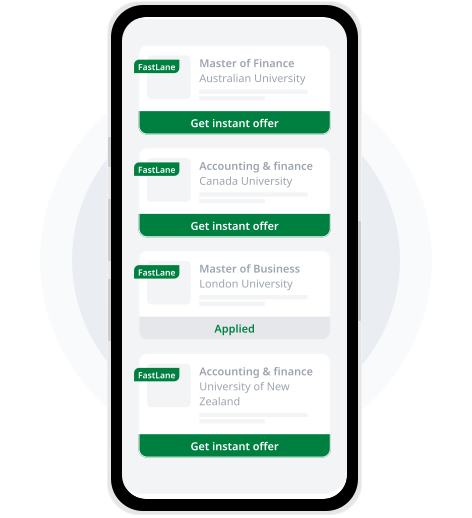 1
1학교와 전공 선택하기
 2
2지원을 위한 계정 만들기
 3
3사전심사서비스를 위한 지원서 제출
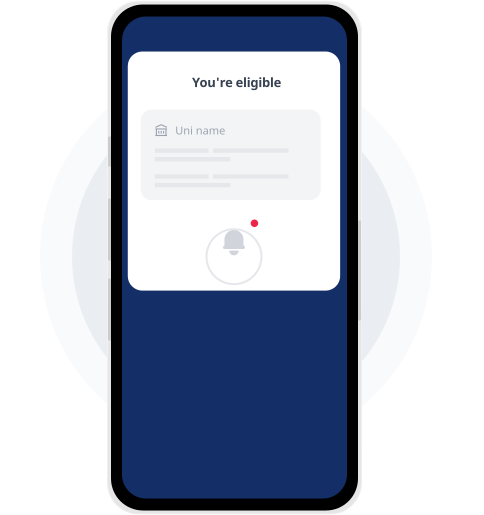 4
4선택하신 학교에서 몇 분 내로 사전심사 결과를 보내드립니다
 5
5전문 카운셀러와 함께 지원준비하기