


Lokasi
New Zealand
Kualifikasi
Masters Degree
Biaya
NZD30415
(2026)
Durasi
1.5 Year(s)
Intake selanjutnya
20.07.2026
Skor masuk
6.5
IELTSCOURSE_INFO
- Beasiswa Lihat semua jurusan
- Magang
Persyaratan masuk untuk Te Pukenga trading as Unitec
Academic requirements:
You must have completed at least one of the following:
- A recognised bachelor\u2019s degree in a relevant discipline with merit (an average grade of B- or higher; Or
- A professional qualification in a relevant discipline recognised as equivalent to merit in a bachelor\u2019s degree or equivalent.
Batas Waktu Pendaftaran
Batas waktu pendaftaran tidak tersedia Hubungi konselor IDP untuk informasi lebih lengkap
Further information
If you aren't eligible for the above entry requirements, you might have a chance to explore pathway options at Te Pukenga trading as Unitec. If you want to find out more, speak to our counsellors.
Apa yang siswa kami pikirkan
Kami belum menerima ulasan apa pun untuk institusi ini.
Chat to a student ambassador
Speak to IDP ambassadors today!

Dima Tokarenko

Aastha Paudel

Geraldine Penarete Vaquiro

Yumi Wan
Your study abroad community
Discover genuine experiences and practical tips from IDP student ambassadors and peers worldwide.

Direkomendasikan untuk Anda
- Postgraduate
- Auckland Cbd , New Zealand
- Intake selanjutnya:20.07.2026
- Skor masuk: IELTS 6.5
- NZD28000 (2026)
- Peringkat Dunia:401
- Postgraduate
- Hamilton , New Zealand
- Intake selanjutnya:13.07.2026
- Skor masuk: IELTS 6.5
- NZD45920 (2026)
- Peringkat Dunia:401
- Postgraduate
- Hamilton , New Zealand
- Intake selanjutnya:13.07.2026
- Skor masuk: IELTS 6.5
- NZD45920 (2026)
- Postgraduate
- Hamilton , New Zealand
- Intake selanjutnya:13.07.2026
- Skor masuk: IELTS 6.5
- NZD24600 (2026)
- Postgraduate
- Mt Albert , New Zealand
- Intake selanjutnya:20.07.2026
- Skor masuk: IELTS 6.5
- NZD30415 (2026)
Your action plan
Langkah 1
Shortlist your courses
Choose the best three courses you’re most likely to pursue.
Langkah 2
Check your eligibility
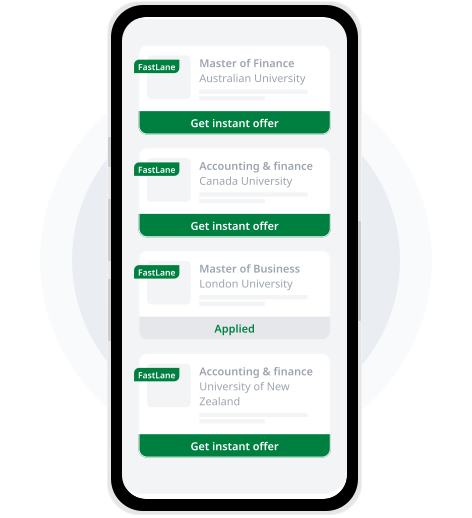
Get an instant in-principle offer for courses with the IDP FastLane tag.
Langkah 3
Apply through IDP Live
Fill out the form once and use it to apply to multiple courses.
Bagaimana cara kerja IDP FastLane?
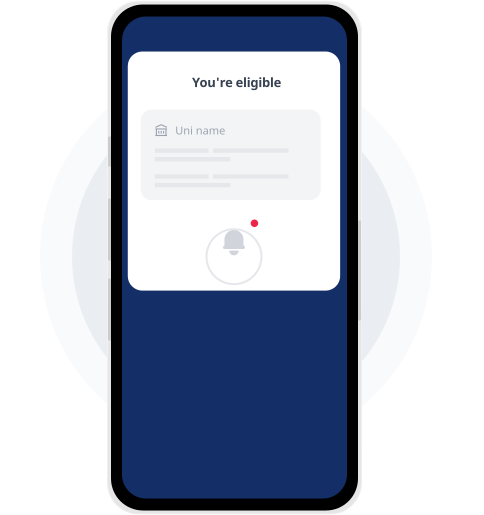
Dengan 'Offer in Principle' dari FastLane, Anda akan mengetahui apakah Anda dapat diterima dalam hitungan menit!
 1
1Pilih institusi dan mata kuliah
 2
2Buat profil akademik Anda
 3
3Kirimkan permohonan Anda untuk 'Offer in Principle'
 4
4Institusi pilihan Anda akan mengirimkan keputusan dalam hitungan menit!
 5
5Bersiaplah untuk mendaftar dengan konselor ahli