


Location
United States
Yeterlilik
Bachelor's Degrees
Ücretler
USD29880
(2026)
Süre
8 Semester(s)
Gelecek alımlar
17.08.2026
Giriş Puanı
6.5
IELTSCOURSE_INFO
- Burslar Tüm bursları görüntüleyin
- Stajyerlik
Kabul şartları University of Colorado - Denver
Son Başvuru Tarihi
31/07/2026
Further information
If you aren't eligible for the above entry requirements, you might have a chance to explore pathway options at University of Colorado - Denver. If you want to find out more, speak to our counsellors.
THE Dünya Sıralaması
Öğrencilerimiz ne düşünüyor?
Bu kurum için hünüz bir yorum yapılmadı.
Chat to a student ambassador
Speak to IDP ambassadors today!

Dima Tokarenko

Aastha Paudel
Geraldine Penarete Vaquiro

Yumi Wan
Your study abroad community
Discover genuine experiences and practical tips from IDP student ambassadors and peers worldwide.

Sizin için öneriliyor
- Dünya Sıralaması:401
- Undergraduate
- Syracuse , United States
- Gelecek alımlar:24.08.2026
- Giriş Puanı: IELTS 6.5
- USD66580 (2026)
- Dünya Sıralaması:801
- Undergraduate
- Waco , United States
- Gelecek alımlar:26.08.2026
- Giriş Puanı: IELTS 6.5
- USD58100 (2026)
- Dünya Sıralaması:1201
- Undergraduate
- San Marcos , United States
- Gelecek alımlar:19.08.2026
- Giriş Puanı: IELTS 6.5
- USD50160 (2026)
- Undergraduate
- Madison , United States
- Gelecek alımlar:17.08.2026
- Giriş Puanı: IELTS 6.5
- USD47434 (2026)
- Dünya Sıralaması:401
- Undergraduate
- Philadelphia , United States
- Gelecek alımlar:19.08.2026
- Giriş Puanı: IELTS 6
- USD38160 (2026)
- Dünya Sıralaması:78
- Undergraduate
- Charlotte , United States
- Gelecek alımlar:12.08.2026
- Giriş Puanı: IELTS 7
- USD37360 (2026)
- Undergraduate
- Orono , United States
- Gelecek alımlar:31.08.2026
- Giriş Puanı: IELTS 6.5
- USD36870 (2026)
- Undergraduate
- Dartmouth , United States
- Gelecek alımlar:04.09.2026
- Giriş Puanı: IELTS 6
- USD32567 (2026)
- Dünya Sıralaması:401
- Undergraduate
- Ames , United States
- Gelecek alımlar:24.08.2026
- Giriş Puanı: IELTS 6
- USD31962 (2026)
- Dünya Sıralaması:351
- Undergraduate
- Denver , United States
- Gelecek alımlar:17.08.2026
- Giriş Puanı: IELTS 6.5
- USD29880 (2026)
Your action plan
Adım 1
Shortlist your courses
Choose the best three courses you’re most likely to pursue.
Adım 2
Check your eligibility
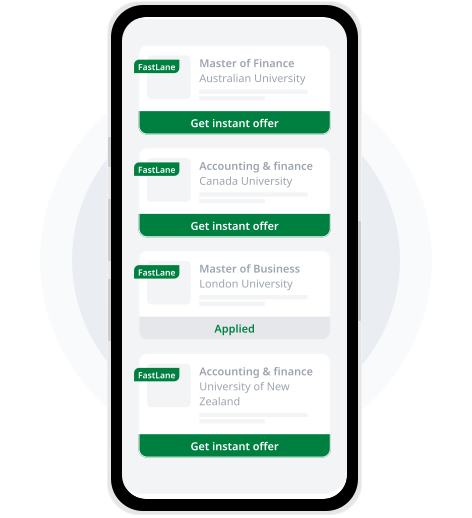
Get an instant in-principle offer for courses with the IDP FastLane tag.
Adım 3
Apply through IDP Live
Fill out the form once and use it to apply to multiple courses.
IDP FastLane nasıl kullanılır?
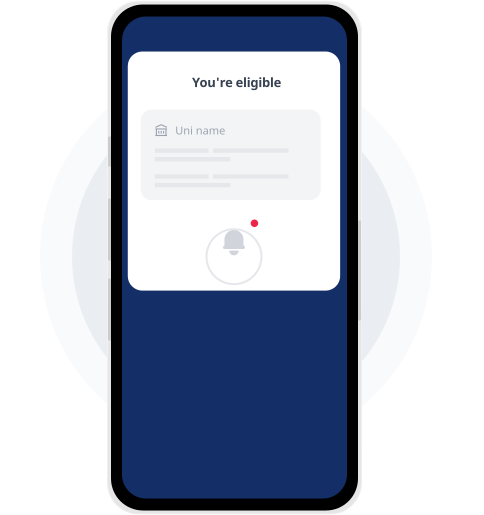
FastLane ile alacağınız 'Ön Teklif' sayesinde istediğiniz okula kabul edilip edilmeyeceğinizi dakikalar içinde öğreneceksiniz!
 1
1Bir kurum ve bölüm seçin
 2
2Akademik profilinizi oluşturun
 3
3Ön Teklif' için başvurunuzu gönderin
 4
4Seçtiğiniz kurum(lar) size dakikalar içinde bir yanıt gönderecek!
 5
5Uzman bir danışmanla başvurmaya hazır olun