


地點
United States
費用
USD65870
(2026)
時長
8 Semester(s)
下個學年
25.08.2026
入學成績
7.5
雅思考試COURSE_INFO
- 獎學金 查看所有獎學金
- 實習
入學要求 University of Rochester
申請截止日期
申請截止日期無法使用 與顧問對談 了解更多細節資訊
Further information
If you aren't eligible for the above entry requirements, you might have a chance to explore pathway options at University of Rochester. If you want to find out more, speak to our counsellors.
Chat to a student ambassador
Speak to IDP ambassadors today!

Dima Tokarenko

Aastha Paudel

Geraldine Penarete Vaquiro

Yumi Wan
Your study abroad community
Discover genuine experiences and practical tips from IDP student ambassadors and peers worldwide.

推薦給你
- 泰晤士高等教育世界大學排名 (THE):127
- Undergraduate
- Rochester , United States
- 下個學年:25.08.2026
- 入學成績: 雅思考試 7.5
- USD65870 (2026)
- 泰晤士高等教育世界大學排名 (THE):127
- Undergraduate
- Rochester , United States
- 下個學年:25.08.2026
- 入學成績: 雅思考試 7.5
- USD65870 (2026)
- 泰晤士高等教育世界大學排名 (THE):127
- Undergraduate
- Rochester , United States
- 下個學年:25.08.2026
- 入學成績: 雅思考試 7.5
- USD65870 (2026)
- 泰晤士高等教育世界大學排名 (THE):127
- Undergraduate
- Rochester , United States
- 下個學年:25.08.2026
- 入學成績: 雅思考試 7.5
- USD65870 (2026)
- 泰晤士高等教育世界大學排名 (THE):127
- Undergraduate
- Rochester , United States
- 下個學年:25.08.2026
- 入學成績: 雅思考試 7.5
- USD65870 (2026)
- 泰晤士高等教育世界大學排名 (THE):127
- Undergraduate
- Rochester , United States
- 下個學年:25.08.2026
- 入學成績: 雅思考試 7.5
- USD65870 (2026)
- 泰晤士高等教育世界大學排名 (THE):127
- Undergraduate
- Rochester , United States
- 下個學年:25.08.2026
- 入學成績: 雅思考試 7.5
- USD65870 (2026)
- 泰晤士高等教育世界大學排名 (THE):127
- Undergraduate
- Rochester , United States
- 下個學年:25.08.2026
- 入學成績: 雅思考試 7.5
- USD65870 (2026)
- 泰晤士高等教育世界大學排名 (THE):127
- Undergraduate
- Rochester , United States
- 下個學年:25.08.2026
- 入學成績: 雅思考試 7.5
- USD65870 (2026)
- 泰晤士高等教育世界大學排名 (THE):127
- Undergraduate
- Rochester , United States
- 下個學年:25.08.2026
- 入學成績: 雅思考試 7.5
- USD65870 (2026)
Your action plan
步驟 1
Shortlist your courses
Choose the best three courses you’re most likely to pursue.
步驟 2
Check your eligibility
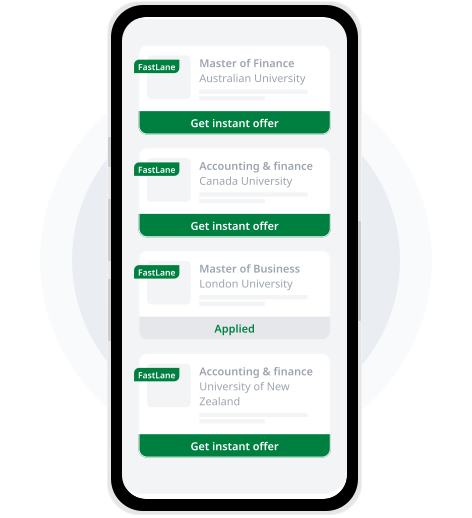
Get an instant in-principle offer for courses with the IDP FastLane tag.
步驟 3
Apply through IDP Live
Fill out the form once and use it to apply to multiple courses.
IDP FastLane 如何運作?
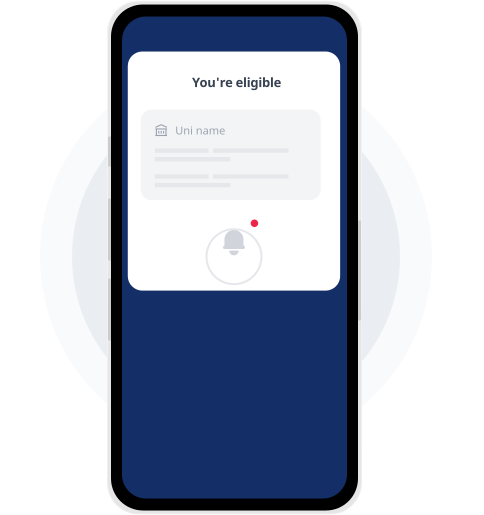
通過FastLane OIP,你將在幾分鐘內知道自己是否獲取錄!
 1
1選擇一個院校機構和課程
 2
2建立個人學術檔案
 3
3提交 OIP 申請
 4
4你選擇的機構將會在幾分鐘內發送結果!
 5
5與留學顧問一起準備申請