
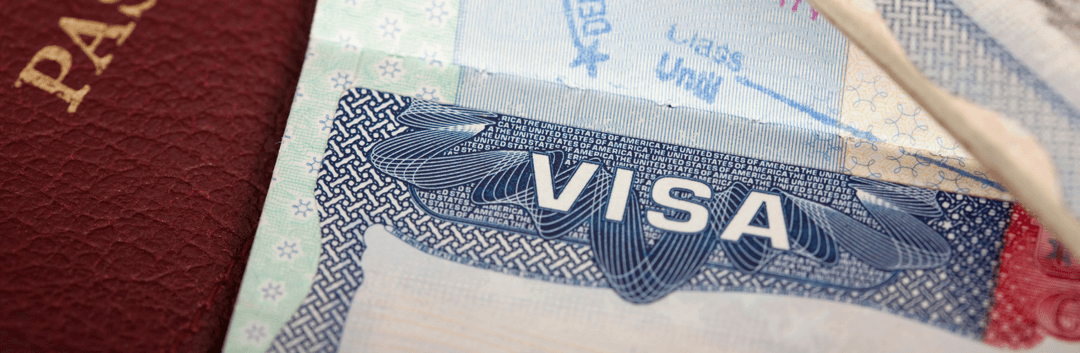
What is a US F1 Visa? Conditions and steps to apply for an F1 visa | IDP Vietnam
Topics covered
- Published: 5 February 2025
- Updated: 3 September 2026
To conquer the dream of studying in US, the first step that every international student needs to take is to apply for a visa. Among the U.S. student visas, F-1, J-1, and M-1, the F-1 visa is considered the most popular. So what is a US F1 visa? What are the conditions for applying for a US F-1 visa? What are the steps to apply for an F-1 visa? Let's find out more with IDP in this article!
1. What is an American F1 Visa?
The U.S. F-1 visa is a visa for international students participating in full-time study programs in the U.S., including elementary, high school, college, university, or English language learning (ELS) programs. This is the most common type of U.S. student visa, administered by the U.S. Department of Homeland Security and issued through the sponsorship of U.S. schools.

In addition, if international students are accompanied by a spouse or child, they will be issued an F-2 visa, which allows their family to accompany them throughout their studies in the United States. Note that the F-1 visa for international students is completely different from the F1 visa, which is for U.S. citizens who sponsor a single child over the age of 21.
Student Community
Join the IDP student community
Connect with peers and student ambassadors to hear real experiences, tips, and advise about studying abroad.

2. Conditions for applying for a US student visa
When applying for an F-1 visa to study in the United States, students and students need to meet a number of conditions and prove at the visa interview to increase their chances of getting a visa. Here are the conditions for applying for a visa:
You must be enrolled in an academic program, language training, or vocational program.
The school you choose must be approved by the U.S. Immigration and Customs Enforcement (ICE) Student and Exchange Visitor Program (SEVP).
You need to be enrolled full-time at your chosen institution.
You must be fluent in English or take courses to improve your English proficiency.
You need to prove that you have enough financial resources to support yourself during your studies in the United States.
You must prove that you do not intend to stay in the U.S. after graduation. The purpose of coming to the United States is only to study and has no other purpose.
3. Steps to apply for an F1 US student visa
To apply for an F-1 U.S. student visa, you need to take the following important steps:
Apply for I-20
Fill out and complete the DS-160 form
Payment of visa fees
Schedule an F-1 visa interview
Pay SEVIS fees
Attend the interview
4. Regulations on part-time work of studying in the US F1
U.S. international students on an F-1 visa are not allowed to work off-campus during their first year of study but can accept on-campus employment for a limited period of time. After the first year, students can work off-campus. However, any off-campus work must be related to the field of study and approved by the school and immigration authorities.
Three types of jobs that students can do off-campus:
Curricular Practical Training (CPT):
This is a compulsory internship related to the discipline and is approved by the officer in charge
(OPT):
Allows students to work in the U.S. before or after graduation for up to 12 months
STEM Optional Practical Training:
Allows students to work in the U.S. 36 months before or after graduation.
5. Cost of US F1 student visa
When preparing to study in the US, in addition to tuition and living expenses, you also need to pay attention to the cost of applying for an F1 visa. Here are the costs that you must pay to be granted a visa (updated in September 2026):
F-1 Visa Application Fee (MRV fee):
$185 (increased from $160 to $185 as of May 30, 2026).
SEVIS I-901 Fee: $350.
6. F1 visa extension with important changes
F-1 international students are granted a maximum 60-day grace period after completing their academic program or OPT period. During this time, students may prepare to leave the U.S., transfer to a new academic program, or take steps appropriate to their immigration status.
To maintain valid F-1 status, students must comply with academic requirements, SEVIS regulations, and U.S. immigration laws. Before renewing a visa or changing their immigration status, students should verify the latest information from U.S. authorities or consult with their school.
Ready to start your journey to study in the USA?
The F1 visa is an important type of visa that helps international students have the opportunity to study in the United States. However, in order to maintain legal status and avoid legal troubles, students need to pay attention to the regulations on the length of stay and extend the visa when necessary.
IDP with more than 30 years of experience in the field of education in Vietnam will accompany you to realize your dream of studying in the United States. From choosing a school, hunting for scholarships to study in the US, registering for IELTS, preparing your study abroad application to student services, IDP is always ready to support you every step of the way.
Contact IDP via hotline 1900 6955 for advice on studying in the U.S. and an F-1 visa that fits your study plan.
See also:
U.S. Student Visa: Updated Eligibility, Documents, Process, and Cost
One account for all your study abroad needs
Create your profile and unlock a wide array of features including personalised recommendations, fast-tracked applications and much more.


